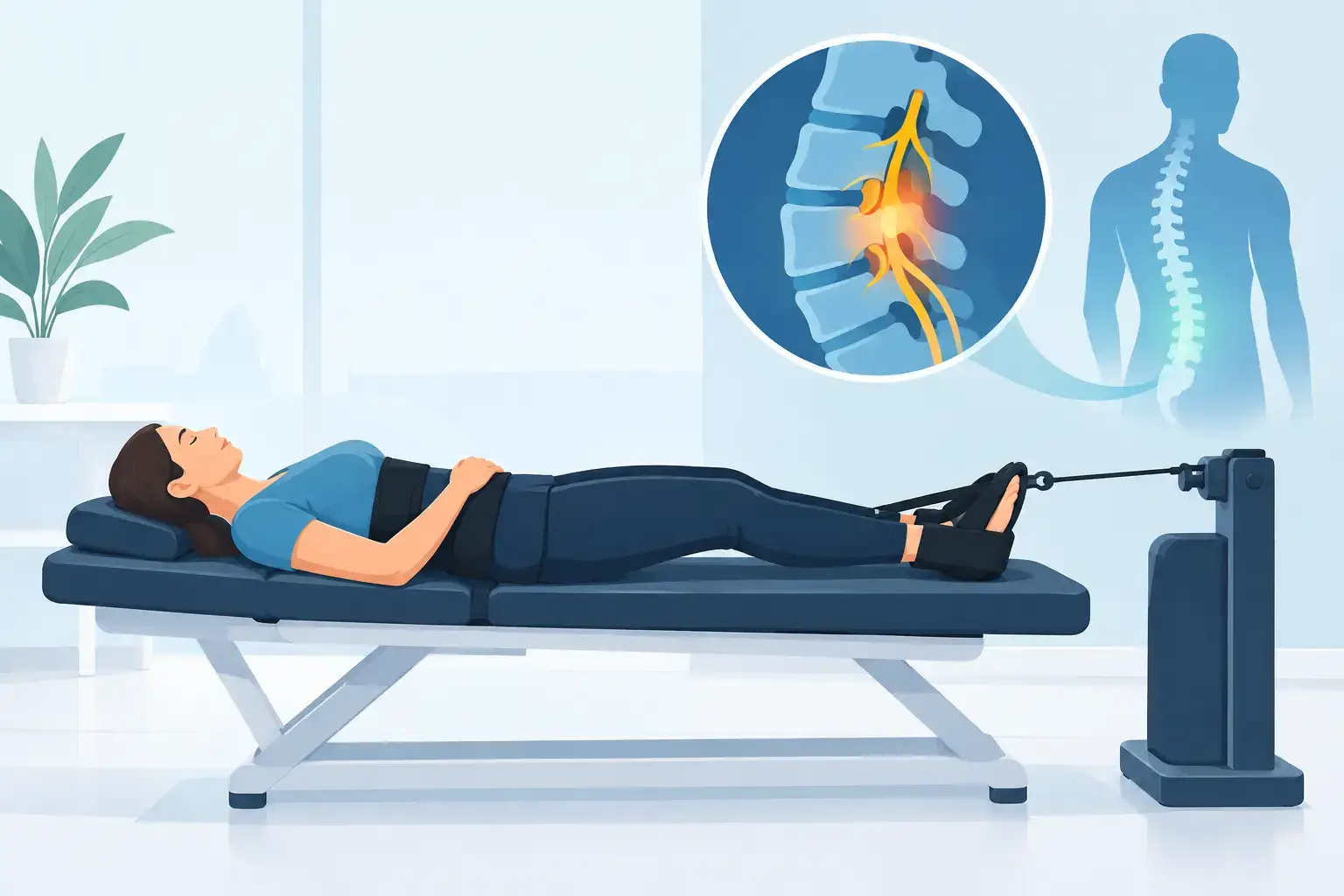
Neck pain after a car accident can make ordinary movements feel surprisingly difficult. Looking over your shoulder, working at a computer, sleeping comfortably, or carrying groceries may trigger stiffness, headaches, or pain that travels into the shoulder and arm. This cervical decompression treatment guide explains how this non-surgical therapy may fit into a personalized recovery plan and when a more complete evaluation is needed first.
What Is Cervical Decompression Treatment?
Cervical decompression is a form of controlled, gentle traction for the neck. A provider uses specialized equipment to create a carefully measured pulling force along the cervical spine. The goal is to reduce pressure on irritated spinal structures while allowing tight muscles to relax and helping the neck move more comfortably.
The cervical spine contains seven vertebrae, discs that cushion the spaces between them, nerves, joints, and supporting muscles. After whiplash, repetitive strain, poor posture, or a disc-related condition, these structures can become irritated. In some cases, reduced space around a disc or nerve may contribute to neck pain, arm pain, tingling, numbness, or weakness.
Decompression is not a forceful neck adjustment, and it is not a one-size-fits-all answer to pain. It is a therapy that may be used alongside chiropractic care, targeted muscle work, electrical stimulation, rehabilitative exercises, and guidance on movement or ergonomics. The right combination depends on your symptoms, exam findings, injury history, and recovery goals.
Who May Benefit From Cervical Decompression Treatment?
A cervical decompression treatment plan may be considered for people with persistent neck pain or symptoms that suggest irritation involving a disc, nerve, or compressed joint structures. It is often discussed when conservative care is appropriate and a patient needs help reducing pain and restoring mobility without surgery.
People may seek care after an auto accident, especially if whiplash symptoms have not improved as expected. Sudden force can strain the muscles and ligaments that support the neck, aggravate pre-existing disc changes, or create symptoms that appear days after the crash. A thorough evaluation helps distinguish straightforward muscle tension from symptoms that may require a more cautious approach or outside referral.
Decompression may also be considered for chronic neck stiffness, certain disc bulges or herniations, radiating arm discomfort, posture-related pain, and headaches that appear connected to neck tension. Relief varies from person to person. Some patients notice improved motion early in care, while others need several visits before the muscles stop guarding and daily activities become easier.
When Decompression May Not Be Appropriate
A responsible treatment plan starts by identifying when traction should be avoided or postponed. Cervical decompression is not appropriate for every neck condition. Your provider should review your history, medications, accident details, imaging when available, and any signs of instability or serious injury.
Prompt medical evaluation is especially important for new or worsening symptoms such as:
- Progressive arm or hand weakness, severe numbness, or loss of coordination
- Problems with balance, walking, or fine motor control
- Loss of bladder or bowel control
- Fever, unexplained weight loss, severe unrelenting pain, or pain following significant trauma
These symptoms do not automatically mean a serious condition is present, but they should not be managed by simply trying traction at home. The priority is finding the cause and protecting your health.
What Happens During a Cervical Decompression Session?
Before treatment begins, the provider evaluates your posture, neck movement, muscle tenderness, reflexes, strength, and symptoms in the arms or hands when relevant. For accident patients, the visit also documents how the injury affects work, sleep, driving, household responsibilities, and other normal activities. Clear documentation supports clinical decision-making and can be valuable when an insurance claim or personal injury case is involved.
During a session, you are positioned comfortably on a decompression table or traction device. A supportive head and neck harness is fitted to keep the pull controlled and aligned. The equipment applies gentle tension for short intervals, often alternating between pulling and resting phases. This cycling can help the neck muscles avoid tightening against the treatment.
You should not feel sharp pain, panic, dizziness, or increased neurological symptoms. Mild stretching or a sense of pressure relief can be normal, but comfort matters. Tell your provider immediately if anything feels wrong so the treatment can be adjusted or stopped.
Sessions are commonly brief, but the schedule varies. Acute injury care may require frequent early visits, while chronic symptoms may call for a gradual plan that is adjusted according to your response. The goal is not to keep you in treatment indefinitely. It is to make measurable progress in pain levels, range of motion, tolerance for daily activity, and overall function.
Why a Personalized Plan Matters After a Car Accident
Neck pain after a collision is rarely limited to one structure. A patient may have muscle spasm, inflamed joints, restricted movement, headaches, and discomfort that makes the nervous system more sensitive to movement. Using decompression alone can overlook the full picture.
A coordinated plan may pair cervical decompression with gentle chiropractic adjustments when appropriate, intersegmental traction, interferential electrical stimulation, trigger point therapy, and progressive mobility work. These therapies serve different purposes. Decompression may reduce mechanical pressure and ease guarded movement, while soft-tissue treatment can address tight muscles and electrical stimulation may help manage pain and inflammation.
The trade-off is that more treatment is not always better. If a particular therapy increases pain, worsens arm symptoms, or leaves you unusually sore, the plan should be reassessed. Good care responds to your body rather than forcing you into a preset protocol.
For personal injury patients, organization matters alongside treatment. Timely evaluations, consistent visit notes, and clear records of symptoms and functional limitations can make a confusing process more manageable. Westside Spine & Injury supports patients with personalized care as well as documentation, attorney and insurance coordination, Letters of Protection, and transportation assistance when available. That support allows patients to focus more fully on healing.
How to Support Results Between Visits
Your daily habits can either support or undermine recovery. Avoid prolonged positions that repeatedly aggravate symptoms, such as looking down at a phone for long periods or sleeping with the neck twisted. Small adjustments, including keeping screens closer to eye level, taking movement breaks, and using pillows that keep the neck in a neutral position, can reduce unnecessary strain.
Follow the activity guidance you receive. Early after an accident, complete rest may make stiffness worse, but pushing through severe pain can also delay recovery. Short walks, gentle prescribed movements, and gradual returns to normal activity are often more useful than either extreme.
Home traction devices deserve caution. They are not interchangeable with clinically supervised cervical decompression. The correct angle, force, duration, and diagnosis matter, particularly after a collision or when symptoms travel into an arm. Ask a qualified provider before using any home device.
Questions to Ask at Your Evaluation
A useful evaluation should leave you with a clear understanding of what may be causing your symptoms and what the plan is designed to accomplish. Ask whether decompression is appropriate for your condition, what changes would indicate progress, how many visits may be recommended before reassessment, and which symptoms should prompt you to call or seek urgent care.
If your neck pain began after an accident, also ask how your care will be documented and whether the clinic can communicate with your attorney, insurer, or case manager. Practical support does not replace clinical care, but it can remove barriers that cause people to delay treatment.
Neck pain can narrow your life quickly, turning work, sleep, driving, and family time into a series of careful calculations. A well-planned cervical decompression program may be one part of helping you move with less pain and greater confidence. The most helpful next step is a thorough evaluation that treats your symptoms seriously, explains your options clearly, and builds recovery around the life you need to return to.