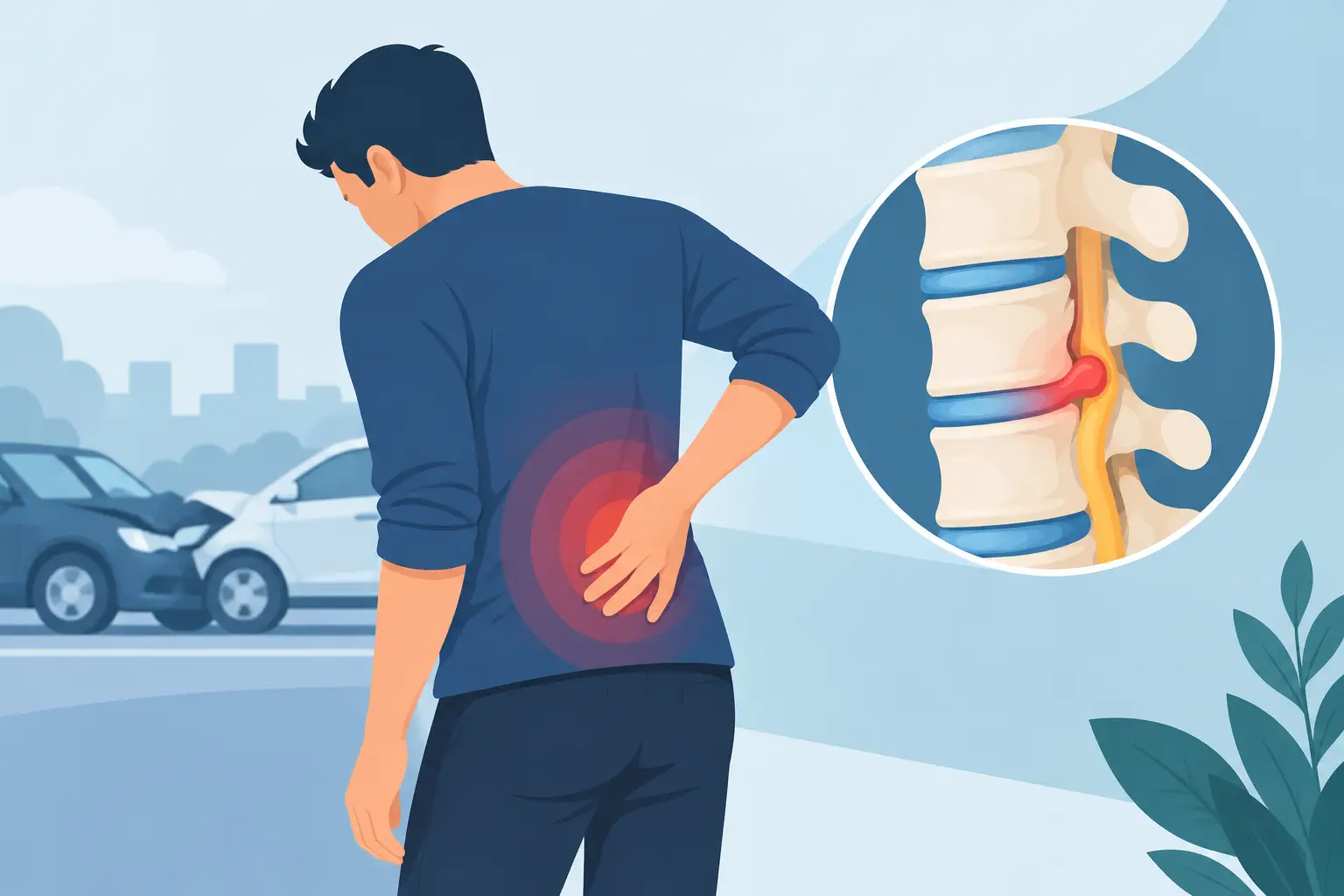
A crash can be over in seconds, yet neck or back pain may not fully appear until later that day or several days afterward. Understanding accident related disc injuries can help explain why pain, stiffness, tingling, or reduced movement may develop after an auto accident, even when there was no obvious injury at the scene.
The spinal discs are built to absorb force, but they are not immune to it. A prompt evaluation gives your care team an opportunity to identify concerning symptoms, reduce pain, restore mobility, and create treatment documentation that reflects what you are experiencing from the start.
What Happens to Spinal Discs in an Accident?
Discs are the cushions between the bones of the spine. Each disc has a softer, gel-like center surrounded by a tougher outer layer. They help the neck and back bend, rotate, and handle the ordinary forces of walking, lifting, and sitting.
During a collision, the body can be pushed forward, backward, sideways, or twisted with much more force than the spine is designed to manage. Rear-end collisions often create rapid neck movement associated with whiplash. Side impacts, rollovers, and even lower-speed crashes can also place sudden pressure on the cervical, thoracic, or lumbar discs.
That force may irritate a disc, strain nearby ligaments and muscles, or worsen a disc condition that was previously quiet. In some cases, the outer layer of a disc develops a tear, and disc material can bulge or herniate outward. If that material or related inflammation affects a nearby nerve, symptoms may travel beyond the spine.
A scan is not the only measure of injury. The location of pain, changes in sensation, strength, range of motion, and the way symptoms affect daily activities all matter. A thorough evaluation looks at the full clinical picture.
Disc Bulges, Herniations, and Inflammation
These terms are often used interchangeably, but they describe different findings. A disc bulge generally means the disc extends beyond its usual boundary over a broader area. A herniation usually involves a more focal disruption of the disc’s outer layer, with inner material pushing outward. Both can be painful, but neither automatically means surgery is necessary.
Inflammation can be a major source of discomfort after an accident. A disc may be irritated without producing severe nerve compression, while surrounding muscles tighten to protect the area. This can lead to aching, spasms, restricted motion, and pain with sitting, driving, bending, or turning the head.
The severity of symptoms does not always match the wording of an imaging report. A small disc change can be very painful if it irritates a sensitive nerve. Conversely, some people have disc changes on imaging with few or no symptoms. The right plan depends on your examination, symptoms, health history, and progress with care.
Symptoms That May Point to a Disc-Related Injury
A cervical disc injury in the neck can cause persistent neck pain, headaches, shoulder pain, or pain that travels down an arm. You may notice numbness, tingling, weakness, or a burning sensation in the hand or fingers. Holding your head in one position, working at a computer, or checking traffic while driving may become difficult.
A lumbar disc injury may cause low back pain with discomfort into the hip, buttock, leg, or foot. This is often described as sciatica when a nerve-related pain pattern runs down the leg. Sitting, coughing, bending forward, or getting in and out of a vehicle can aggravate symptoms.
Pain can be delayed because adrenaline and the immediate stress of an accident may mask early symptoms. It is also common for inflammation and muscle guarding to build over the next 24 to 72 hours. Delayed pain does not mean you should ignore it or assume it will resolve without an evaluation.
When Symptoms Need Urgent Medical Attention
Most accident-related disc symptoms can be evaluated through an appointment, but some signs require urgent medical care. Seek immediate attention for new loss of bowel or bladder control, numbness in the groin area, rapidly worsening weakness, major difficulty walking, severe unrelenting pain, or symptoms following a significant head injury.
These symptoms can indicate a serious neurologic or spinal concern. They should not wait for a routine chiropractic visit.
How a Disc Injury Is Evaluated After a Crash
An effective evaluation begins with the details of the accident: how the impact occurred, where you were seated, whether airbags deployed, and what symptoms began afterward. Your provider will also ask about prior injuries, current limitations, and whether pain is affecting sleep, work, childcare, or basic movement.
The physical examination may include posture, spinal motion, muscle tenderness, reflexes, sensation, and strength testing. These findings can help identify whether symptoms are more consistent with muscle strain, joint dysfunction, nerve irritation, or a possible disc condition.
Imaging is sometimes appropriate, but it is not automatically required for every patient. X-rays may help assess alignment or rule out certain bony concerns. MRI is often more useful when a disc or nerve issue is suspected, particularly if symptoms persist, neurologic findings are present, or the clinical picture calls for further investigation. Your provider can determine when referral or additional imaging is appropriate.
For personal injury patients, early and consistent records matter. Clear documentation of symptoms, examination findings, treatment recommendations, and functional limitations can support communication with an attorney or insurance company while keeping the focus where it belongs: your recovery.
Non-Surgical Care for Accident-Related Disc Pain
Many people with accident-related disc injuries improve with conservative, individualized care. The goal is not simply to chase pain from one appointment to the next. It is to calm irritated tissues, improve movement, reduce compensatory muscle tension, and help the body return to normal activities safely.
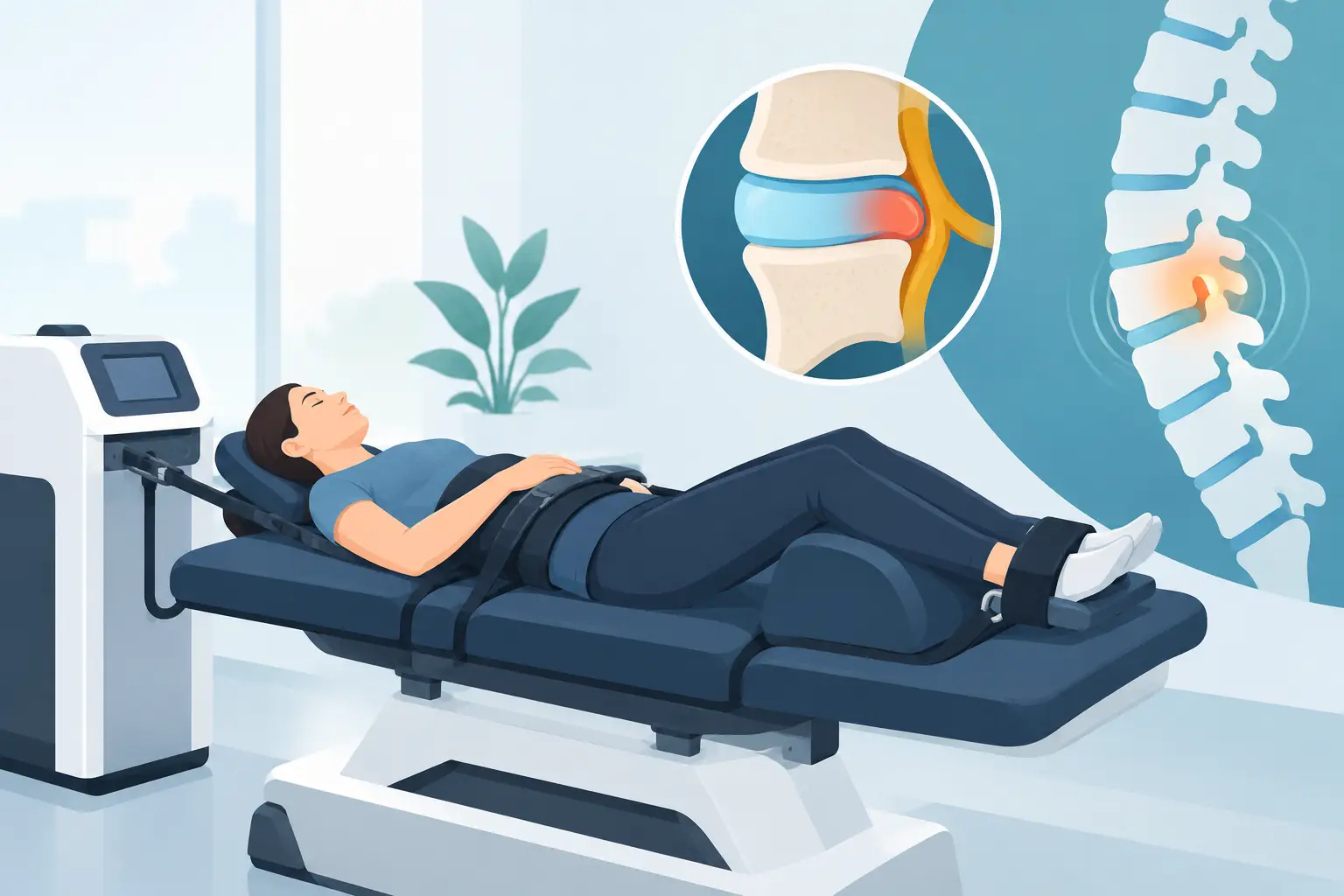
Treatment may include chiropractic adjustments when clinically appropriate, along with therapies designed to reduce inflammation and muscle guarding. Spinal or cervical decompression may be considered for certain disc-related symptoms to gently reduce pressure and support mobility. Intersegmental traction can encourage movement through the spinal joints, while interferential electrical stimulation may help manage pain and muscle tension.
Trigger point therapy can address the tight, painful muscles that often develop around an injured area. As symptoms allow, a plan may also include guided mobility work and practical recommendations for sitting, sleeping, lifting, and returning to work or exercise. Treatment should change as your condition changes. What is useful in the first painful week may differ from what supports later strength and function.
There are trade-offs to consider. Rest can be helpful immediately after an injury, but too much inactivity may increase stiffness and deconditioning. Pushing through sharp pain or neurologic symptoms is not a recovery strategy either. A personalized plan helps you find the appropriate middle ground.
Why Consistent Care and Documentation Matter
Disc symptoms can fluctuate. A patient may feel better after a few days, then experience a flare after returning to a long commute, lifting at work, or sitting through a family event. Consistent follow-up allows the treatment plan to reflect those changes and gives your provider a clearer view of what is improving and what still needs attention.
For people managing a personal injury claim, missed care can also leave gaps in the medical record. That does not mean recovery has to become stressful paperwork. Westside Spine & Injury helps patients coordinate treatment records, Letters of Protection, attorney communication, insurance communication, and transportation support when needed. Organized case management can remove practical barriers that make it harder to focus on healing.
Protect Your Recovery After an Accident
Do not judge an injury only by whether you can get through the first day after a crash. Pay attention to changes in pain, numbness, headaches, sleep, and your ability to do ordinary tasks. Write down when symptoms began and what makes them better or worse, then bring that information to your evaluation.
Early care is not about assuming the worst. It is about giving a possible disc injury the careful attention it deserves, so you can move forward with a clear plan, appropriate support, and greater confidence in your recovery.